Log in


Photographs by Hugo Yu
This article was featured in the One Story to Read Today newsletter. Sign up for it here.
Here is the promise you and I must cling to across the thousands of words that follow: At some point within this text, I will reveal to you what—after 555 responses, 13,000 miles of travel, and months of monomaniacal research—I have determined to be the best free restaurant bread in America. I will not attempt to slither to the moral high ground, arguing that best is a meaningless measure, or insisting that all bread is dear in its own way. Even if you attempt to betray me—for instance, by merely scanning the text that follows for the phrase Here it is: the best free restaurant bread in America—I will uphold my end of the bargain.
I encounter on this quest three types of Americans, because only three types exist. The type that you are—or the type that you are dealing with—is revealed in response to the question “What is the best free restaurant bread in America?”
The American people, alas, have grown skittish about answering plain questions. An unconscionable number ask what I mean by this, as if the words might have an obscure double meaning. To be clear: Any bread from any restaurant in America is eligible, so long as it is free to all customers. The contents of the basket set on the table before the meal arrives, the cost of which is invisibly diffused throughout other menu items. Rolls that arrive unbidden. Popovers, if everyone gets a popover no matter what. You know what I’m talking about. Free restaurant bread.
The first type of American: people who joyride the day’s updrafts like marvelous, glossy crows. They easily recall the locations of treats encountered over their lifetime. They answer this question Glock-shot fast, as if they have been waiting to be asked it. They are happy.
The second type: fairly certain that they have consumed bread at some point; allows that a portion of that consumption could have occurred within the confines of a restaurant, or a restaurant-like environment; will grant that some pieces of said bread were perhaps free and/or enjoyable to ingest. But they profess to have retained no specifics. Their personal histories are inscribed in chalk, regularly power-washed with jets of deterging Time. They resent the implication that they could ever derive meaning from the pale, abstract remnants of narrative that constitute their internal autobiographies, and, with a few kindhearted exceptions, will not attempt to. Many, in fact, will appear oddly furious to have been asked this question, and will invent wafer-thin excuses as to why they are unable to spend two seconds considering it.
The third type: a tragic, paranoid (though occasionally brilliant) figure. Ask this person, “What is the best free restaurant bread in America?” and their eyes shimmer with panic. These individuals live with the terrific knowledge that there is a best free restaurant bread in America, and the awful conviction that they are incapable of identifying it. It is not a lack of contenders that prevents them from volunteering an answer—the prison of their mind teems with memories of free restaurant breads—rather, they are silenced by a hallucinatory fear of nebulous consequences that could befall them should they personally misidentify the best free restaurant bread in America, even in private conversation. Asked this question, such people refuse to answer. “It’s too much pressure!” they insist. Whence this pressure, of what force, applied to what possible end, is never explained. Men and women with advanced degrees are overrepresented in this type.
Though it strikes the ear as an insoluble query, there is a correct answer—right now, known only to God (and to me, an agent of his will), but erelong to the steadfast reader.
Here is where the notion for the undertaking came from: Tucked within the viscera of the continental United States is a restaurant that gives away superb free bread. Every time I have eaten it (before this past year, three times total), I have said aloud (to my husband, who did not care), “This is the best free restaurant bread in America.” The thought made me feel the way you do when you realize you were just a half a moment away from being plowed by a car, and were spared only by a chance nanosecond of dawdling before stepping into the street: giddy and flabbergasted and grateful to be alive. It seemed incredible, but also possible, that this really could be the best free restaurant bread in America. What if it was? Even more dizzyingly, what if it wasn’t? What if—unfathomable—someone else was giving away an even better bread for free? The thought drove me crazy. I begged for the opportunity to investigate.
[From the November 2025 issue: Caity Weaver on what it takes to be a Revolutionary War reenactor]
Naturally, I told my superiors, this investigation would bring me into contact with the entire arc of human history. People have been eating bread—in many places, eating mostly bread—for millennia. We can’t say for certain that the individuals who fled their burning homes on the shore of the Sea of Galilee 23,000 years ago (leaving behind baskets they’d woven, tools they’d carved from bones, and sleeping areas they’d turned snug and cozy) ate bread, but we know from microscopic barley and oat remnants embedded in a grindstone abandoned to the flames that they were, at least, processing flour. (To situate these folks in time: Cats would not be domesticated for another 14,000 years or so.)
Once people began munching bread, they never stopped. (Or, at least, they never stopped until very recently.) The word bread can also refer more generally to food, sustenance, or livelihood—not just in English, but in languages from Russian to Hindi. Breadcrumbs are scattered throughout our language. The word lord is derived from a compound word in Old English—hlāfweard—translating, roughly, to “loaf guard” or “loaf keeper” (breadwinner could be seen as a modern fraternal twin); lady comes from hlæfdige : “loaf kneader.” The arm bones of Neolithic women, researchers have found, were 11 to 16 percent stronger than those of the women’s rowing team at the University of Cambridge, likely from grinding grain for hours every day.
[Read: What bread tasted like 4,000 years ago]
(Of course, eventually, my investigation would lead me back to the site of the bread that inspired it, thereby accomplishing my secret personal mission: procuring a fourth basket of free bread from that restaurant. Unfortunately, what happened to me on my return visit was so shocking and abominable, I was tempted to re-pitch this article as “What Is the Restaurant in America That I Hate, That I Will Never Go Back to, That Has Made of Me an Enemy for Life Due to Its Psychotic Soda Policy”—on which, more upsetting details to follow.)
How would I determine the best free restaurant bread in America? Simple: I would ask every single person I encountered, “What is the best free restaurant bread in America?”; travel to the most likely candidates; and try the bread myself.
The $725.32 Free Bread
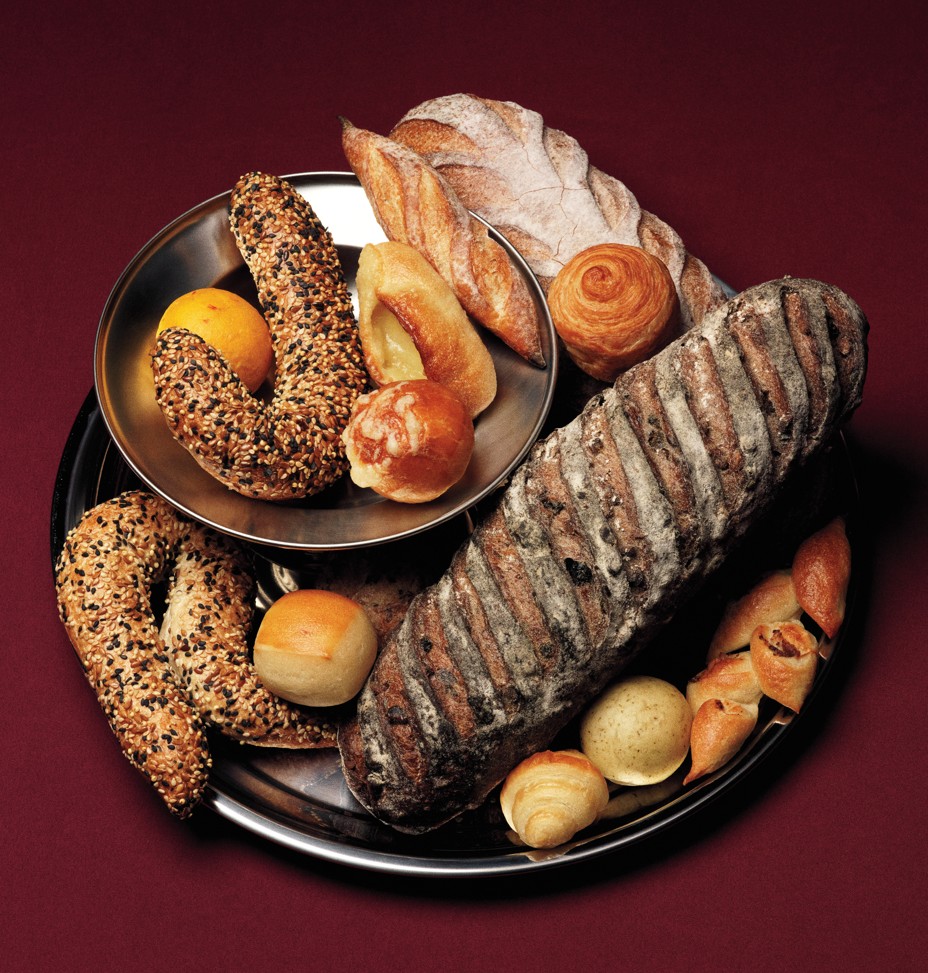
Sixteen splendorous bread varieties are yours for claiming off the three-tiered lacquered rolling cart at Joël Robuchon in Las Vegas. You can have as many as you want, all for free, with your meal. My meal was the Degustation Menu, which costs $525 per guest. The breads range from the fanciful (surprisingly pointy bacon-and-mustard pods, heart-stoppingly yellow saffron focaccia) to the nearly indistinguishable (classic baguettes, traditional baguettes). There are flaky spirals and poofy cubes and bread with the gently rounded profile of a tasteful breast implant. There is olive bread; rosemary brioche; basil focaccia; walnut raisin; one miniature croissant; two cheese breads; a third kind of baguette that is exactly the same as one of the other baguettes, only smaller. There is country loaf. Sixteen.
The three-Michelin-star Joël Robuchon is located within the abyss of the MGM Grand Las Vegas, directly adjacent to a Cirque du Soleil–themed gift shop, though it seems determined to ignore this fact. The MGM’s more than 5,000 rooms colluded to make it the Earth’s largest hotel when it opened in 1993; it has since lost that ominous distinction without shrinking in square footage. Roaming its purgatorial interior, you could be wandering a mega–cruise ship beached in the desert, or vacationing amid the elevator banks of a parking garage containing every car in the world. It is as all-encompassing as the world of a nightmare. In addition to Joël Robuchon, at the time of my visit, the MGM’s droves of restaurants included a Netflix-themed chow palace, Netflix Bites—where screens over the bar silently flashed random trailers for Netflix original programming, interspersed with Stranger Things and Bridgerton screen savers (Netflix Bites has since closed)—and a restaurant inspired by the Jonas Brothers’ great-grandmother, Nellie’s Southern Kitchen: A Jonas Family Restaurant.
Unlike at Netflix Bites, there are no hot-pink signs reading I’D BON APPETIT HIM inside Joël Robuchon; it is a refined place, its cream facade evoking the stately grandeur of Haussmann’s Paris. Chandeliers, plural, are visible through the glass doors. The Robuchon dining room is peculiar within the MGM in that it was built to human scale; it feels like a rich person’s living room, down to the smattering of black-and-white framed snapshots of Nicolas Cage and Celine Dion. I am seated on a velvet couch of Tyrian purple, opposite a tabletop trio of pink roses and in front of a Nic Cage photo. My black napkin is of a material lovelier than my dress; to sleep beneath sheets stitched from such napkins would be the apex of indulgence.
The concept of an elegant chuck wagon buckling beneath the weight of its cargo of bread is not unique in Las Vegas to Joël Robuchon, but the Robuchon grain trolley is esteemed as one of the finest. To ensure that I will be hungry enough to sample the totality of its breads at my 9:15 p.m. reservation, I consume nothing after a modest breakfast. This will prove to be a mistake. By afternoon, counting down the hours in my MGM hotel room ($39.20 a night before fees, a little more than 5 percent of my dinner bill), I pay more serious consideration to a can of Sour Cream & Onion Pringles—which I do not even like—than I did to the paperwork when I bought my car. I gaze, too, upon a lavender can next to the potato chips, envisioning the sugarplum delights it might enclose. Upon closer inspection, it turns out to contain a vibrator, two condoms, and personal lubricant (could this be edible as a kind of syrup?). By the time I am shown to my purple couch, I am hungry enough to eat the tablecloth.
The army of waitstaff who attend to each patron at Joël Robuchon is classy. When I confess to my headwaiter that I would, if possible, prefer not to have lamb for one course, he thanks me as if I have paid him a compliment. These professionals, many of whom have worked here for decades, would never make a woman eating a $525 meal alone at 9:15 on a Monday night feel bad for any request. But still. It is impossible to lock eyes with a Frenchman, after he has just spent minutes delicately extolling the virtues of 16 different breads, and ask, “Could I do one of each?” without feeling ridiculous, no matter how evenly he responds, “Absolutely!”
Unaware that every passing second escalates the odds that they will lose a silver button, a finger, or even a limb to my ravenous maw, the waiters continue the pageantry of the bread service. “Butter from France!” one trumpets as he wheels over a second cart, this bearing a hoodoo of butter beneath a spotless glass cloche large enough to contain a human head. A spoon in each hand, he shaves off a translucent spiral, which he confetties with salt. I am so dangerously close to eating the butter plain, like a scoop of ice cream, that I hear him announce, “Olive oil from Alicante!” only faintly, as a cry from a distant ship.
At last, 20 impeccably choreographed minutes after my arrival, my first round of breads is placed before me: 12 oven-warmed rolls crammed into a silver bowl. For one light-flooded second, I am a doe in high beams, paralyzed by everything that could happen next. Then I grab the bacon-and-mustard roll and throw it into my mouth so fast that I forget to taste it. I am about to snatch a second roll, any roll, when a waiter materializes at my elbow to tell me a story.
It is the history of what he calls “a beautiful dish”—a beautiful dish he has recklessly placed between myself and my breads. It is a shallow bowl of mesmerically arranged dots: three concentric rings of molar-size white dots, each topped with a little green dot, converging, as if in worship, upon a perfect circle that is itself an agglomeration of still smaller black dots—all suspended in straw-colored jelly. It looks like something from the biology lab at Liberace University. These, I am informed, are chlorophyll-kissed cauliflower pearls surrounding a caviar disc. The caviar is flecked with 24-karat gold leaf. I scarf it down like my dog inhales breakfast, in order to get back to the bread.
The saffron roll tastes of nothing. The pale-green basil focaccia looks like bread from the morgue. Some of the pickings are quite tasty, but the sheer number of rolls dilutes the impact of each. When the headwaiter asks if I have a favorite “so far,” I humiliate myself by describing a square bread covered in cheese that does not exist. He instantly identifies the two rolls I have conflated—an ethereal marshmallow-size cube made with milk instead of water, and a sphere crowned with crunchy, oven-toasted Gruyère that tastes like cheese-flavored air—and brings out more of these for me to confirm. I accept; I could eat 60 to 600 more!
Another mistake. I had meant to merely sample the breads; instead I am consuming each in toto. The remaining 13 courses are whisked out to me at a relentless pace. There are triangles of many colors; foam; a leaf that is a cake; a ladybug that is candy; gold foil distributed with such apparent abandon—festooning a truffle; smeared on the rim of a glass—that it may simply be drifting through the kitchen’s HVAC system like ash from a phoenix’s nest. “I’m eating so much gold,” read my notes.
As I challenge the elastic limits of my gastric wall, distending it with hundreds of dollars’ worth of fabulous things in rare shapes, and also rolls, I rely more and more on the chemical burn of Diet Coke to excoriate my palate between bites. Joël Robuchon’s Diet Coke is crisp and cold, and swims right up to the brim of the voluptuously curved glasses they serve it in; it devours my tongue like a cleansing fire. Feeling sheepish, and also sluggish, and also like I will never be hungry again, I ask the maestro of the bread cart if I might have my second round. It is time for the loaves.
At 10:46 p.m.—90 minutes after my arrival; I’m exhausted, unable to eat another bite of anything—I calculate how many courses I have left. Five?! I am given a plate of Ibérico ham. It tastes exquisite: nutty, salty, rich. I force it down like I am eating packing peanuts. I notice that I have begun shivering slightly, probably because of the frosty Diet Cokes. “I love Diet Coke!” I write in my notes. Tendrils of conversation from other diners drift to my table. “This was such a good dinner!” one woman declares—a demented way to describe what has happened here tonight; this is dinner in the same way that Australia is an isle. I impel myself to eat all of the foie gras I am served, because I know it is made inhumanely. It is 20 minutes to midnight by the time my posh experience draws to a close. I prefer the traditional baguette to the classic baguette.
What’s the Point of the Article?
“What’s the point of the article?”
This is the question an exasperated William Rubel, the author of Bread: A Global History, demands of me. Rubel is an American who was made a Chevalier of the Ordre National du Mérite Agricole by France’s minister of agriculture for contributions to agricultural knowledge. He is a scholar affiliated with no university. His objective is the total comprehension of a small portion of culinary history—aptly, because, with his untamed thatch of shoulder-length white hair and woolly-caterpillar brows, he looks like someone who could have been alive at any point in the era of man. He also founded a children’s literary magazine.
“Fun article for people to read,” I tell him glumly.
Rubel’s knowledge of bread is so comprehensive—and mine so nonexistent—that he is quickly, if cantankerously, becoming my own hlāfweard : the curmudgeonly warden of all loaf understanding. I came to him originally with a question to which I could find no answer: Why did restaurants start giving away bread for free?
“It’s the opposite of what you asked,” Rubel says. “It’s not ‘When did they begin giving away bread for free?’ Because no one could have imagined sitting down at the meal and not eating bread. It was not possible.”
In the timeline of Western civilization, restaurants are a brand-new trend. The United States had batteries before it had a restaurant. Delmonico’s began operating in New York City in 1837 as a novel kind of dining space: one where patrons could purchase individually priced items off a menu. Prior to the importation of this French-style concern, a person who wished to be served a meal away from home was pretty much restricted to an oyster saloon (where they could have oysters) or an inn or a tavern (where a flat fee purchased whatever meal everyone else was getting—not necessarily oysters). To say that a 19th-century American tavern meal included bread would be like remarking that a 21st-century restaurant meal includes cutlery. We know that America’s first restaurants offered bread to patrons because it would have been unthinkable not to.
People have judged restaurants on the quality of their free bread from the institutions’ earliest days. In what is possibly America’s first restaurant review (a madcap meta-account published in The New York Times in 1859), the bread at New York’s Astor House is deemed “the best bread in the universe.” And although dozens of poll respondents insisted to me that complimentary bread, as a concept, has been lately abandoned in this country—that “every” restaurant charges for bread “now” (not true)—in fact, people have been complaining about vanishing complimentary rolls for at least a century. In 1912, the Times devoted days of coverage to outrage over a new 10-cent charge for bread and butter: “HOTEL DINER BRINGS IN HIS OWN BREAD,” read the headline of an article that described one man’s attempt to skirt the fee.
In the days of tavern dining, proprietors would have wanted customers to fill up on as much bread as possible, so that they would consume less of the more expensive ingredients to which they were entitled. À la carte restaurants perhaps felt themselves grandfathered into what had become a mark of hospitality. Chefs I consult attest to free bread’s ability—a finite ability—to make kitchens run more smoothly (by slowing down orders). It also makes customers less whiny: Restaurants give you free bread “just so that you have something to do with your hands and your mouth,” Richard Horner, a New Orleans chef and restaurateur, tells me.
Horner lays bare the strategic timing of this generosity. Ideally, free bread should not hit the table until after customers have ordered their meal, “because then they order from a position of maximum hungriness,” he says. Plus, the delay builds anticipation: “Will there be bread? I see other people with bread. We haven’t got bread yet.” And then, once the bread is bestowed: “Oh! There is bread! What a fun surprise.”
Horner’s demonic calculation for how many slices or rolls each table’s basket should contain is [Number of diners] + 1. Unevenly divisible bread creates “a tension that I really enjoy.”
But Horner describes himself as “anti–free bread”—a common position among restaurant professionals. A premature breadbasket can gut the total bill. Also, the bread intended to placate customers can just as often be something else for them to complain about. “They get really, really particular about this thing you’re giving them for free,” Horner says. “ ‘This isn’t hot’ or ‘Bring me more stuff ’; ‘I need more bread’; ‘I need more oil and vinegar for some reason’; or ‘This butter is wrong.’ ” He sees the decline of free bread as a consequence of restaurants being stretched so thin during the pandemic. They just got fed up: “You know what? You don’t get bread anymore! ”
Several chefs, including the author Alison Roman, make the case that customers, by demanding bread that is free, deprive themselves of bread that is worth eating. “It’s either good and you pay,” Roman tells me, “or it’s free and bad. Bread costs money to make. It takes skilled labor, and it shouldn’t be free.”
Horner echoes her point. When free bread is “an afterthought”—provided only because free bread is expected—“I would rather just not have it on the table,” he says. If you’re going to give customers bread, “it should be as good as the rest of your food. And if that’s the case, you should charge for it.”
(No one outside the food industry ever tells me they’d prefer paying for excellent bread to receiving mediocre bread for free. Most people just want to be given bread they have not paid for. That bread being good constitutes a rare and wonderful possibility—certainly not an expectation. Nothing tastes as good as free costs.)
My primary means of determining the best free restaurant bread in America is to demand answers from people—my father and friends, yes, but also anyone else I can think of. Strangers encountered on errands. Everyone who sends me an email during the month of October. “What is the best free restaurant bread in America?” I amass several hundred answers.
In harvesting this knowledge, I am exposed to countless novel methods through which humans might delight, disappoint, irritate, and surprise one another. Some people invent their own question on the spot and answer that instead: Asked to identify the best free restaurant bread in America, they tell of a great bakery where bread can be purchased for money, or the worst free restaurant bread in America. Others imagine that the question contains some hidden constraint, which they undertake to expose—“It can’t be a chain restaurant,” they declare, or “It has to be a chain restaurant.” The fixins’-dazzled deliver monologues about butter and olive oil, forgetting that bread exists. One smug stranger in a hot tub tells me that she cannot answer, because she makes her own bread. (Does she bring it to restaurants?) A number decline to consider the question, because they no longer eat gluten. (I don’t require anyone to eat the bread they mention.) (Unrelated warning—not a threat: Gluten-free bread is unable to transubstantiate into the body of Christ, according to Catholic law.) Some folks itch to argue with me about what I mean by bread, daring me to reject their votes for pitas, sopaipillas, corn tortilla chips, or hush puppies. They are disgruntled to learn that I let each person define bread as he or she wishes, desiring only that it incorporate a non-raw staple starch.
[From the March 1989 issue: Corby Kummer on the ideal panettone]
I am astonished that only a minority of people can summon an answer quickly. My mental filing cabinet devoted to cataloging free restaurant breads is one of the largest and most scrupulously maintained in my neocortex; I’ve discarded the contents of other filing cabinets (“Visuospatial Reasoning,” “First Aid”) to make room for it. What occupies the free-bread space in others’ minds? Americans of the second type—those who don’t have an immediate answer to the best-free-bread question—are certainly not charmed by being asked. They seem to resent being pulled out of the swift current of their life and forced to ponder restaurant bread for a few seconds. But aggression is not limited to such people. A man from Boston overhears me asking another stranger the question in an elevator, and cuts in: “Any restaurant you walk in, in the North End, is the best bread.” I ask him to name one. “Any of them,” he says. “Pick one,” I encourage. The man grows furious: “Any of them!”
My father’s answer surprises me. When I was growing up, he, my mother, and I were all serious eaters (not in the sense of being discerning, but of deriving satisfaction from doggedly plowing through any volume of food) with a special penchant for free items. At 81, he tells me, he possesses a single vivid memory of free restaurant bread: He ate it on one of the handful of days in his life that he saw his father. “He would show up occasionally and try to act like the big dad,” my father recalls, bringing Christmas presents to his wife and sons in South Philly. Once, in 1962, my grandfather bought his sons—one in the Air Force, the other (my father) a teenage gang member—lunch at the Four Seasons in Manhattan.
I am stunned to learn that my father—an indefatigable storyteller who I thought had long since frog-marched me through everything that had ever happened to him—once went to a restaurant as nice as the Four Seasons. I’d thought he might say the biscuits at Red Lobster, a restaurant that was the setting for so many jubilant meals with my parents, grandparents, and cousins that I struggle to recall a distinct memory from it; every meal blurs together in a montage of steaming biscuits and laughing faces, not unlike a commercial for Red Lobster. I ask my dad if he has any happy memories of his father. “None that I can think of,” he says. But he remembers that the bread was warm.
What Celebrities Don’t Want You to Know
Hear me when I say this: Irrespective of the vibrant plausibility of your parasocial fantasies, America’s celebrities are not your friends. There is only one good celebrity in this world: the author Stephen King. According to Mr. King, the best free bread in America is “crusty and warm” and served at Hyde Park Prime Steakhouse in Sarasota, Florida. Given the fact that no other star, out of the scores I contact via their representatives, successfully manages to answer this question, I can conclude only that America’s celebrities consider it their unholy mission to ensure that her masses—their fans—die ignorant of the identity of her best free restaurant bread.
Publicists demand to know which other celebrities are telling me their favorite free restaurant bread before they will even consider passing along this question. LeBron James cannot devote one minute to contemplating the best free restaurant bread in America, a representative confides in October, because the totality of his “focus” is “on preparing for the upcoming season”—a frightening and lonely thought. (A few weeks later, James will shatter the tempered-glass backboard of his concentration at 6:32 a.m. Los Angeles time, confessing on social media: “I love watching YouTube golf ⛳ videos!! Random I know. lol. SO COOL!” I email his rep a plea to slip the question to James while a YouTube golf video is loading. Do not hear back.) Ben Affleck cannot answer due to being “in the midst of a project”—aren’t we all? Jennifer Lopez is likewise “filming a movie right now” and therefore totally unreachable by terrestrial communication.
Do you want to know how abjectly I debase myself, attempting to divine this forbidden knowledge from the impenetrable minds of celebrities? I contact Chris Pratt’s publicist to seek Pratt’s answer, even though—since we’re all being so honest—I don’t especially care to know it. (I am merely asking to be polite.) “We need to politely hold off as there isn’t interest,” comes the reply. Excuse me! That is actually not polite! I don’t need to know that Chris Pratt isn’t interested; and also, how can he not be interested in such an interesting topic? And also, I am the one who is not interested! But this is not even my lowest moment. That nadir is struck when I am forced to reach out to my nemesis: a celebrity publicist I have previously sworn never to speak to again, because several years ago she lied to me—did not refuse to comment; flat-out lied—when I asked her a direct question. Typing my query about the best free restaurant bread in America to this individual feels like dragging my raw, bleeding fingertips across a gravestone that has been scorched by lightning. And would you believe that not only does this publicist fail to provide an answer to my fun and fascinating question; she does not even acknowledge receipt of my email or my follow-up email ? And so now I am forced to put into writing my new vow, a vow I will keep, even if it one day destroys my life, even if it kills me: Ashley, the next time you and I cross paths, it will be in hell.
(“What a nice article this will be to read,” Oprah Winfrey’s ultra-classy publicist writes, while unequivocally declining her client’s participation.)
On a handful of occasions, my interactions with public-relations professionals are at least moderately helpful. When pressed, Buzz Aldrin’s and Tyler Perry’s publicists reveal what they (these men’s publicists) consider to be the best free restaurant bread in America, though they will not ask their principals; I duly log their data.
More often, the exchanges are vexing. The senior director of media relations for the country’s largest food-service lobbying group, the National Restaurant Association—the other NRA—tells me that no one from the group will be able to speak with me about free restaurant bread in any capacity, because it “isn’t a trend that we track.” I ask if someone might be able to chat with me about free restaurant bread anecdotally. “It’s not even something we could talk about anecdotally,” she responds. I ask if she will tell me what, in her personal opinion, is the best free restaurant bread in America. She never replies to me again. (Neither here nor there, but in 2023, an investigation by The New York Times revealed that this NRA used the $15 fee that restaurant workers pay to attend its mandatory food-safety course to fund a nationwide lobbying campaign against minimum-wage increases.)
Almost but Not Actually the Best Free Restaurant Bread in America
Here it is: the best free restaurant bread in America are words that, in deference to the integrity of this investigation, I am unable to print immediately followed by the cymbal-washed, experimental-jazz phrase Red Lobster Cheddar Bay Biscuits. But such an announcement would be very nearly true. Raw poll numbers situate Red Lobster’s signature bread offering—knobbly, crimpled clods, butter-radiant and freckled with parsley—comfortably in second place. I have personally enjoyed these rolls (introduced in 1992 under the straightforward name Hot Cheese Garlic Bread) so many times that I worry I will struggle to evaluate the biscuits impartially, the same way a friend’s beauty seems to increase over time as your love for her deepens. And so I beg my friend Alice, an Englishwoman for whom Cheddar Bay is mare incognitum, to let me watch her sample her first at our local Red Lobster in Santa Fe.
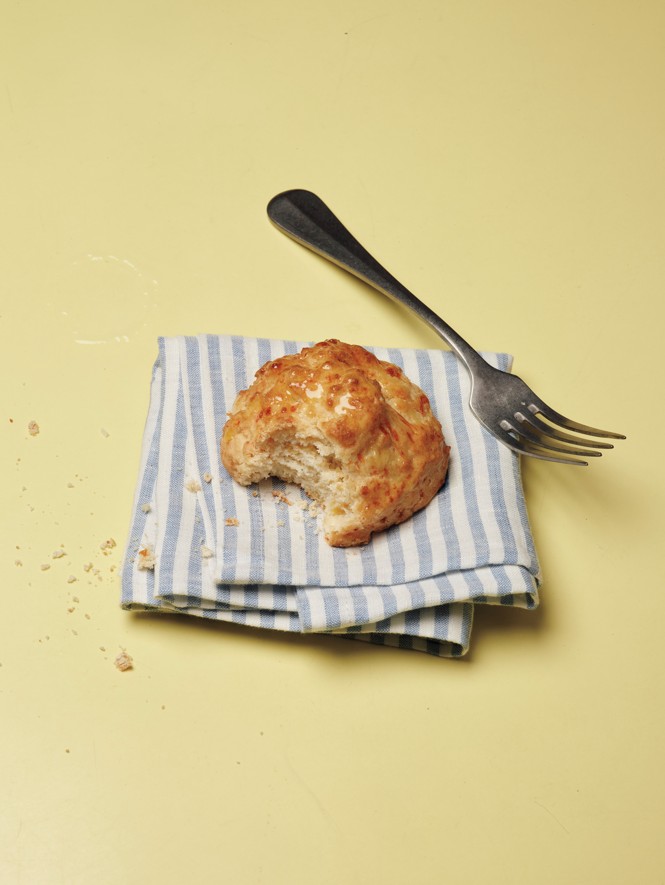
Our Ultimate Feast is not without some painful moments, such as when, one second before tasting the milky-slurry piña-colada dipping sauce for our Parrot Isle Coconut Shrimp, Alice asks, “What is this?” and then, at the exact same moment I gaily sing, “You’re gonna like it!,” gasps, “Oh my God—that is disgusting.” But her verdict on the Cheddar Bay Biscuits is effusive: “Americans have got a lot of things right regarding the texture of foodstuffs,” she says. “Outstanding.”
The problem is that I want to examine the nubiform texture of these foodstuffs at Red Lobster’s culinary-development center, in Orlando.
My email inquiry is answered by a representative from the PR firm that fields press requests for Red Lobster. I express my desire to visit the offices of the company that purchases a quarter of the lobster and crab caught on boats in North America; she tells me she will “check in with the brand to see what is possible.” What is not possible, I am informed a few days later, is setting foot anywhere inside the corporate lobster den, let alone its gleaming test kitchen. I can enjoy no audience with Damola Adamolekun—who at 35 became the youngest Red Lobster CEO in company history and has spent recent months in a media blitz, promoting the brand’s determination to claw its way back into the hearts of young Black Americans as part of a post-bankruptcy revitalization strategy. Instead, I am invited to submit some questions via email or Zoom to ancillary executives.
By coincidence, in the midst of these faltering negotiations, I meet someone who previously worked with Adamolekun. She says he’s “really cool,” “actually quite lovely”; I should just email him directly, rather than becoming ensnared in PR red tape, like the hundreds of thousands of dolphins, whales, seals, etc. that perish in the Earth’s oceans each year, tangled in trash and fishing gear; here is his email address. I send Adamolekun a short email, in which I attempt to make it clear that I am likewise really cool and actually quite lovely. “I’d like to figure out a fun way to feature Red Lobster in the story,” I say. “I have a couple ideas that would involve you directly.” (Ideas like: eat the biscuits with him, and many other ideas that will hopefully occur to me if he writes back.)
And that is how I learn that Damola Adamolekun is a snitch.
The next day, I receive an email from the same PR rep. “The brand and I connected following your email to Damola,” she writes. “To keep things streamlined and to spare Damola’s inbox, feel free to continue corresponding through me. 😊”
This PR representative is made of steel. Googling her name unearths a YouTube assignment recorded for a college public-relations class a few years ago. In it she coolly addresses the camera while expressing regret for a factory collapse in which, “so far, 1,100 people have lost their lives.” (The crisis-video exercise was apparently inspired by the 2013 Rana Plaza disaster in Bangladesh, in which 1,134 people were killed while working in a building where clothing was manufactured for retailers including the Children’s Place and Benetton. “I cannot express how sorry I am that this had to happen,” she tells the camera calmly.) I give up trying to penetrate the Red Lobster carapace.
What Is the “Best”?
Let us acknowledge that the “best” bread is influenced by current fashions. Soft white bread was, for much of human history, a yearned-for extravagance. Today, Americans generally regard it as the nastiest, lowest form of bread and stock it in their cheapest grocery stores. Tastes change.
The late 19th century in New York City—soot-blackened, ammoniac with horse urine—spawned a frenzy for breads baked in sanitary conditions. Under the headline “Bread and Filth Cooked Together,” an 1894 exposé by The New York Press devoted several lurid paragraphs to the cockroach kingdoms of cellar kitchens, where, according to state inspectors, vermin “abounded, and as chance willed became part of the salable products.” One baker recounted how an employer had forced him to mix worm-infested, “green and rotten” old pumpernickel into new dough to add volume. The English language “is not sturdy enough,” the article insisted, to convey “the animate and inanimate horrors” that its reporters had uncovered. (“Unclean Men Mix the Dough and Sleep in the Same Rooms”!) Within eight months, public outcry fast-tracked a law implementing minimum hygiene standards, including housing toilets in rooms separate from the ones where dough was kneaded.
By the early 1900s, basement bakeries were being replaced by aboveground factories. The new operations began packaging bread in waxed paper as a visual marker of sanitation. The paraffin-coated paper, moreover, helped bread go stale more slowly by delaying moisture evaporation; new additives incorporated directly into the dough delayed staleness further. Soft white bread that stayed fresh for days, once a product of wild fantasy, became commonplace.
[From the November 1935 issue: Ready-sliced bread]
The rolls served at Texas Roadhouse (third place in the best-free-restaurant-bread contest by raw votes) are indisputably soft and white, roundly square, and immaculate enough to have possibly made themselves with no outside aid. Seven hundred years ago, a king might have eaten such satin-smooth bread on Easter; the Roadhouse gives it out for free, in portions that are infinite. (The first basket accompanies you to your table, like a fellow guest.) The menu items my husband and I order during our visit are remarkable in their own way—no rabbits stealing the last of the November lettuces by moonlight ever chewed a colder salad than our Caesar—but without question, the free rolls, accompanied by honey-cinnamon butter, are the only items really worth paying for (besides the lovely, big Diet Cokes).
If the paschal king were served the bread now in vogue in the United States, he would be apoplectic. People might die. Our most au courant breads would be, to him, peasant fodder—dun-colored, chewy, whole-grain bricks or, even more inexcusable, loaves rendered intentionally sour.
That the “best” bread is prescribed by trend is demonstrated by no bread better than sourdough. Before the 20th century, William Rubel points out, it was considered unwise to eat bread that tasted acidic, biting, or in some way off: “Eating sour foods was credited with the reason that your family had diarrhea.” But, he says, in the 21st century, “the high-end culinary elite in this country is very aggressively against any bread that’s not sourdough.”
After an explosion of interest in the United States during the first spring of COVID, the obsession has continued to flourish, borne, Rubel says, on a memory mirage. In contrast with, say, grits (a dish that has, more or less, been eaten continuously in North America for more than a thousand years), there is, he insists, “no sourdough tradition in the United States.”
In this country, sourdough gained widespread usage in the days of the Gold Rush—as a term to refer not to bread but to people. According to legend, fortune hunters in the western hinterlands, far from a steady supply of baker’s yeast, kept their starters (a bit of fermented dough that could be added to the next day’s mix) warm by sleeping with them, which caused the miners to reek of sour dough.
As a term referring to a type of bread, rather than a type of person, sourdough did not take off before the 1960s, when it was presented as a kitschy, tough-to-chew wilderness food. Alice Waters—the farm-to-table divinity whose altar is every traffic-thronged urban farmers’ market—brought a craving for French-style sourdough back to California after she had it in Paris, where levain has a much longer history. Americans have now “fetishized the sourdough,” Rubel says, so much so that, in their pursuit of tradition, they have bolted out beyond it, into an ahistoric gastronomic delusion: American sourdough, Rubel says, is uniquely astringent. “In France, they don’t want it to taste sour.”
Rubel also tells me that the whole premise of my article is flawed. “I think you need to think about favorite versus best,” he says. He objects to the fact that I am using the terms, essentially, interchangeably: “Obviously, those can be really different.”
Rubel’s pronouncement severs the tether that has been weakly holding me to reality as I attempt to determine the best free restaurant bread in America. I spend an afternoon losing and evading my own mind across a kaleidoscopic astral plane of axiological and epistemological contemplation. What if the true criteria for what makes one bread the best are unknown, not just to me, but to everyone on Earth? What are the chances that my 555 poll takers represent, exclusively, morons and deviants, whose tastes in no way reflect those of normal people? Wouldn’t many people citing the same thing as their favorite necessarily make it, at least in some way, the best?
The Bread That Flies Through the Air
While I attempt to ask as many different sorts of people “What is the best free restaurant bread in America?” as possible, my sample—though it encompasses respondents of diverse ages, races, incomes, political persuasions, formal-education levels, points of geographic origin, etc.—is inevitably limited.
Lambert’s Cafe is a remarkable contender for several reasons. Although it has only three locations, in Missouri and Alabama, its bread is among the 10 most-named by respondents: four strangers from the internet, two members of my husband’s family, a museum curator my friend knows, and the chef of another restaurant I visited on my quest. But the most noteworthy thing about Lambert’s Cafe is that it distributes its free bread to diners by lobbing it at them from across the room, forcing them to catch it in their bare hands. It is, as its shockingly robust gift shop makes clear 20 million times over, the “Home of Throwed Rolls.”
I make my pilgrimage to Lambert’s a few days after last Christmas; in Foley, Alabama, families are milling around outside at night in T-shirts and shorts. The restaurant sprawls like a commercial ag shed. Its furnishings are psychotropic, but devoid of the gentle embrace of tranquilizers. Above my booth hang several wooden birdhouses and one birdcage (all vacant), an Alabama license plate, a lithograph of a magician, signs advertising gasoline and Coca-Cola, an illustration of mules in a river, a T-shirt for a wheelchair basketball team framed behind cracked glass, and a metal pictogram that appears to warn of ducks.
Not since stoop-shouldered Irish monks illuminated miracles on vellum in aureate arsenic have more densely inscribed materials than the Lambert’s Cafe menu been produced in the Western Hemisphere. Each page bears more rules and explanations than I have ever seen on a menu or legal document—all the more impressive because each page also contains more pictures. There are portraits of Lambert forebears; cartoons of farm animals making dry allusion to the fact that they are subject to slaughter for their protein; a Zodiac Killer cipher key, elucidating the 12 abbreviations for common allergens that speckle the menu; edicts governing plate sharing and doggie bags; an exhortation to visit the gift shop; a list of salads, all of which contain meat; the yowl “SLICE O’HOG From the left side and cut fresh every day!”; and many other elements, besides.
The one that soothes me so totally that it sends all the adrenaline molecules in my body drifting away on a blood lazy river is a red-text promise: “ALL YOU CAN DRINK” soft drinks. My Diet Coke is served in the restaurant’s signature mug, which, I learn later, while typing these very words, holds 64 ounces of liquid, and which, I also learn—upon Googling 64 oz x 2 to gallons—means I drank an entire gallon of Diet Coke in one sitting? No???
Lambert’s Cafe ovens turn out an average of 520 dozen rolls a day, for a total of more than 2 million five-inch rolls a year. On the night of my visit, the roll warden—the hlāfweard—is a young man in heatproof gloves with the salient biceps and keen sight of a baseball player. Patrons signal that they would like a roll to be hurled at them by raising a hand in the air. The accuracy of the bread thrower’s aim is spectacular, especially considering that his mental calculations must incorporate a flash assessment of each customer’s degree of hand-eye coordination. In the nearly two hours I spend in the restaurant, I see only one roll miss its mark, obviously due to catcher error.
These rolls are, I discover when one collides with my chest cavity, as hot as meteorites slamming into the Earth. They are, by far, the hottest part of my meal, which includes numerous cooked items. The rolls—big and bulbous, with a dense and super-soft interior; faintly sweet and just east of gummy; the tranquil hue of hot-dog buns—are fine but not great. I would absolutely go back. Terrific big sodas!
The Bread of the Appalachian Dancing Bear
Do you know what I love most about my spreadsheet containing 555 replies to the question “What is the best free restaurant bread in America?” (Apart from the fact that it has revealed to me, and soon to you, the hitherto hidden knowledge of what is quite possibly—and in fact I really do believe—the best free restaurant bread in America.)
I love seeing what 555 people said. I love the American optimism, which even more American confidence transforms into certainty, that every respondent is, or at least could be, possessed of the knowledge of the best free restaurant bread in America. I love the fact that no matter where you travel within the 50 states and Washington, D.C., you are never far from what at least one person considers the best free restaurant bread in America.
I love the town names—Big Indian, New York (named for a Munsee Lenape man, allegedly more than 7 feet tall, who lived there); Bee Cave, Texas (named for the honeybees—Mexican honeybees, allegedly—who lived there). I love the chance that the best free restaurant bread in America is to be found on an island off the coast of South Carolina with a population of 130. I love contemplating the food court inside the Pentagon—site of a Lebanese Taverna, whose warm pita is nominated as the best free restaurant bread in America by a man eating at Netflix Bites, and by the chef José Andrés. I love the outrageous-but-not-impossible prospect that the best free restaurant bread in America might be handed out by an oyster bar in Omaha, which is almost as far from an oyster bed as it is physically possible to be in America.
Cafe Capriccio. Sanitary Fish Market and Restaurant. Silver Saddle. Spindleshanks. Because I lack the budget and employer patience to journey to each of the 226 restaurants that received only a single vote, I determine, instead, to visit just one. This will serve as a spot check, to assess the quality of random strangers’ nominations. Having no better means of selecting the spot, I pick the one that has the most charming name. This is how I end up driving into the woods—fully into the woods—of Townsend, Tennessee, to dine at Dancing Bear Appalachian Bistro.
Dancing Bear’s entrance is an illusion of carved pine and glass. On approach, its doors appear to depict the arches and stained-glass windows of a Gothic cathedral; close up, the woodwork resolves into the sloping tree branches of a humble forest scene. The dining room, on a cold winter night, is a cozy hall abundant with wood, lit and warmed by an immense stacked-stone fireplace.
The free bread arrives on a slate slab: two wedges of corn bread drizzled with sorghum syrup, next to a ruffled dollop of whisper-light butter. The bad news: Corn bread is just not my favorite. Therefore, I do not believe Dancing Bear’s corn bread is the best free restaurant bread in America. The good news: If you love corn bread, this might well be the best free restaurant bread in America, to your misguided taste. It is fathoms above other corn breads. It does not crumble into infinite particles when I bite it. The wedges leave wet sorghum smacks on the slate. In fact, I am dribbling sorghum all over the table. What decadent madness, to entrust every diner with such a sticky substance. I request more bread and, using my trowel-shaped knife, coat it in butter as thickly as a mason mortaring a chimney. I eat a knifeful of the salty butter alone because I am a wild animal. The bread is so good, it makes me giddy. Is corn bread my favorite?
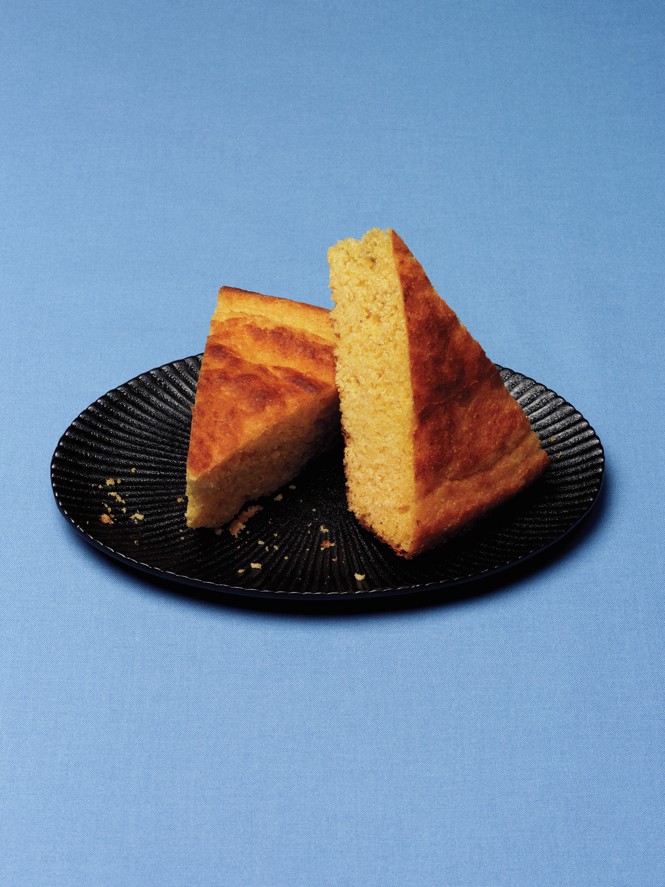
(Eventually, I learn that I just happened to be there on a corn-bread evening. The restaurant also serves two varieties of focaccia.)
The rest of my meal—roasted-garlic-and-herb-crusted beef-tenderloin tips with local mushrooms, apple-cider gelée, Granny Smith apples, and pickled cranberries; steamed Moosabec mussels—is so delicious as to border on the hallucinatory. The room thrums with conviviality, pierced, now and then, by shrieks of intoxicated laughter. I cannot shake the thought that, when people imagine a perfect little restaurant, this dining room is what they are searching for. When, as I mull dessert options, my waiter tells me that I may also just help myself to free s’mores outside, I wonder how this reasonably priced restaurant (my meal, with dessert—and free s’mores—comes to just over $60 before tip) can possibly make money.
Datassential, an analytics company that monitors the food-and-beverage industry, uses a representative sample of 4,800 establishments to keep tabs on restaurant-menu trends across the United States. In 2012, when the company began tracking the practice of charging for bread, 6 percent of restaurants did it. Last year, 36 percent of restaurant menus in the sample offered some form of bread as an appetizer, and 41 percent of menus listed it as a side. Seemingly every newspaper or magazine story about the increasing popularity of “bread courses” features at least one chef, owner, or manager explaining that a restaurant can no longer afford to give bread away. I want to know how Dancing Bear pulls it off.
The restaurant’s bread cost per table is “really not that much,” says Dancing Bear’s executive chef, Jeff Carter—about 40 cents, he estimates. The vice president of operations, Houston Oldham, tells me that has “very little effect on our bottom line.”
“If somebody’s telling you that they are scared of having bread on their menu because it costs too much,” Oldham says, “there is a cost of pain for your guests too: a cost of a bad experience when you don’t have a way to fill the gaps between courses.”
And, Carter says, the bread enhances the festive atmosphere. “We kind of consider this our gift to the guest.”
The other thing that Dancing Bear gets just right: nice big Diet Cokes in stout glass jars. And they keep them coming.
The Restaurant in America That I Hate, That I Will Never Go Back to, That Has Made of Me an Enemy for Life Due to Its Psychotic Soda Policy
A confession: Throughout this investigation, I nurture an unscientific—though, I am fairly certain, forgivable because ultimately correct—bias. Although it receives just one vote (mine), I remain confident that the bread that inspired this quest truly is the best free restaurant bread in America. A week after my trip to the earthly paradise known as Dancing Bear Appalachian Bistro, I fly to Atlanta—to the steak house Bones—to eat it.
Here is what the restaurant does beautifully on my visit: the bread. It is a boule cut into four wedges. Every possible shade of golden retriever, from pale cream to the deepest cognac orange, is represented by some centimeter of this rotund loaf; its floured bottom is the dark brown of all of their paw pads. Its crust is a texture known to old-fashioned Yankees as cat ice—the brittle sheet, so thin that a cat’s paw could shatter it, of an iced-over puddle. On very close inspection, the irregular latticework of air pockets inside the chewy crumb resembles a network of semi-translucent cobwebs. It has no dominant taste other than the flavor of the verriest bread—simple, warm, perfect bread—which it possesses in extraordinary quantity.
Here is what the restaurant does poorly: serves Diet Cokes in glasses that are, I’m going to say, no bigger than a thimble inside a sewing kit inside a dollhouse and, I am astounded and appalled to discover upon receiving my bill, charges you $4 for each and every single one you drink. (Having previously dined here only as my husband’s brilliant and visually stunning dream date, I had apparently never looked at a bill at this restaurant.) Over the course of one evening, I spend a total of $16 on Diet Cokes. Worth every penny, of course—1,600 of them—but I’ll never go back.
I award this restaurant negative 10 million stars.
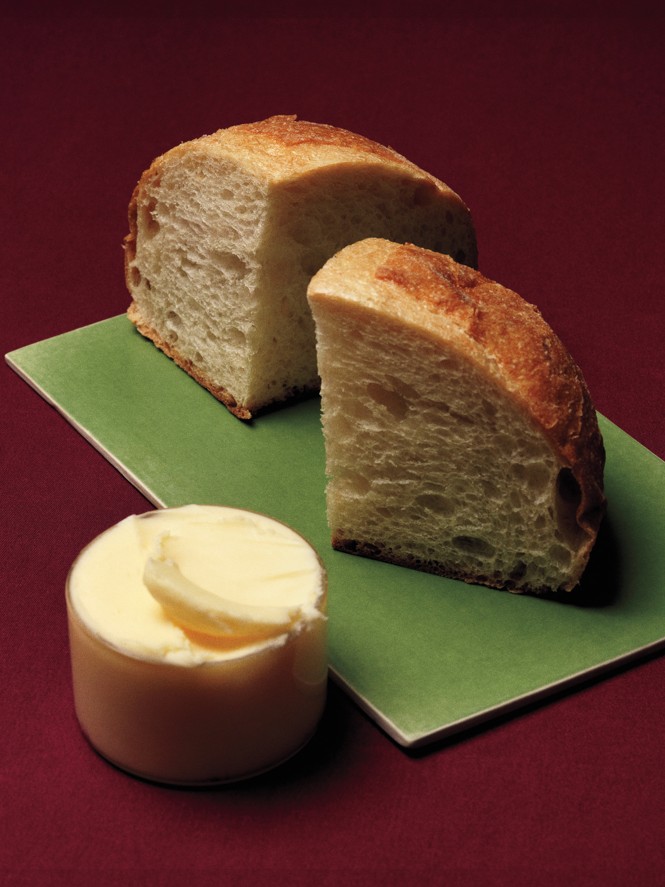
unlike the restaurant’s contemptible Diet Coke–pricing strategy. (Hugo Yu for The Atlantic)
The Chain-Restaurant Popularity Paradox
Can the best free restaurant bread in America come from a chain restaurant? According to raw poll votes, the answer is yes. Chain restaurants claim nearly every spot in the top 10 of my poll. On the one hand, this is to be expected; people are more likely to have been exposed to the bread at a restaurant with 940 locations than at a restaurant with just one. On the other hand, although chains are named most often in the responses, the number of a restaurant’s locations do not predict its overall popularity; Olive Garden, with the most locations, receives the fifth-most votes.
I email Sir David Spiegelhalter, a professor emeritus of statistics at the University of Cambridge and a former president of the Royal Statistical Society, to see if he might suggest a math equation to derive meaning from my helter-skelter data. “If a restaurant had 10 customers, and 8 thought it had the best bread, this would seem more impressive than if another restaurant had 100 customers, and 10 thought it had the best bread,” he writes back. I concur with my associate. The problem: To weigh the number of votes a restaurant received against the number of that restaurant’s customers, I would need to find reliable estimates of each restaurant’s customers per year. “But I don’t know where you get the footfall data from!” replies Sir David, now as hopelessly lost as I.
I decide to calculate the rate of bestness by analyzing the two variables I know for certain: the number of each bread slinger’s locations and the number of nominations it received.
Dividing votes (40) by location (215) gives the Cheesecake Factory—the restaurant that received the most total votes—a bestness rate of 0.19, or the equivalent of 19 votes per 100 restaurants. Lambert’s Cafe earns a bestness rate of 2.66—the equivalent of 266 votes per 100 restaurants. While imperfect, this method at least does not penalize restaurants for failing to be national chains—though, for the purposes of the poll, I accept all nominations at face value. If a person tells me they believe the best free restaurant bread in America can be had at Olive Garden, I believe them. I am open to the possibility.
William Rubel is not open to the possibility. When I mention that table bread, these days, is most reliably found at restaurants like the Cheesecake Factory and Texas Roadhouse, he is staggered that I’m even considering them as possible purveyors of the best free restaurant bread in America. “It never occurred to me that that’s what you’d be referring to,” he says.
“There is no best bread, in an elite cultural sense, at these places you’ve mentioned—which are places that people like me have never been.” He “cannot imagine why I would ever walk through the door” of such a place. He would “never go to” them “under any circumstances.”
I imagine a circumstance: What if a Red Lobster is all that’s around?
“I don’t eat at chain restaurants,” he says. “I eat at artisan restaurants.”
What if he were driving, I insist, and there were no other options. Would he starve?
“That’s why I don’t travel the United States,” he says.
Red Lobster, Rubel explains, is “what I would read as sort of down-market. I’m sorry—you go there.” (Only when it’s open!) “But it’s not going to Chez Panisse.” The amount of money possessed by the average Red Lobster patron is likely less than the average diner at a restaurant evaluated by the James Beard Foundation, he observes. Therefore, he points out—not unreasonably—their concepts of “value” may differ.
It will be impossible, Rubel thinks, for me to identify the best free restaurant bread in America if I’m willing to entertain nominations for chain restaurants. “Because, I’m sorry, those factories are not producing anything that would be called ‘best’ by any objective standard—probably,” he says.
However, “brown bread” from the Cheesecake Factory is not only the most popular answer in the poll; it also tends to come to people quickly. Helen Rosner, a food correspondent for The New Yorker, sums up the tastes of the nation even without being privy to the polling data. “Obviously the Cheesecake Factory’s brown bread is the gold standard of free restaurant bread,” she writes to me in an email—and, in the same heartbeat, presents a bang-on psychological profile of the country’s citizens. “It’s distinct,” she writes. “Dark brown bread shows up pretty rarely in most people’s daily lives, so it both feels special, and has the competitive advantage of not being subconsciously compared to near-infinite other breads of similar complexion.”
One January afternoon, I travel to the smallest Cheesecake Factory in America—the flagship location, in Beverly Hills—to break brown bread with Jay Hinson, the company’s senior vice president of restaurant-kitchen operations. The average Cheesecake Factory location serves about 7,500 “brown breads”—they are “whole-wheat baguettes,” technically, drearily—a week, plus 6,800 of the less-remarked-upon sourdough baguettes that accompany them in the same basket. All of the bread is baked off-site—the sourdough at facilities in New Jersey and Los Angeles, the brown bread in Chicago—frozen, and shipped to the restaurants, where it is rebaked to order. The Cheesecake Factory declined to share any details about the amount of money it spends creating thousands of breads for hundreds of restaurants every week, but at one point in our conversation, Hinson observes, “It is very expensive to have a bread program that is free.” At another, he tosses out a hypothetical scenario in which a restaurant company might spend “$10 million” on bread, which seems like an absurd number to chance upon as a totally random example; make of that what you will.
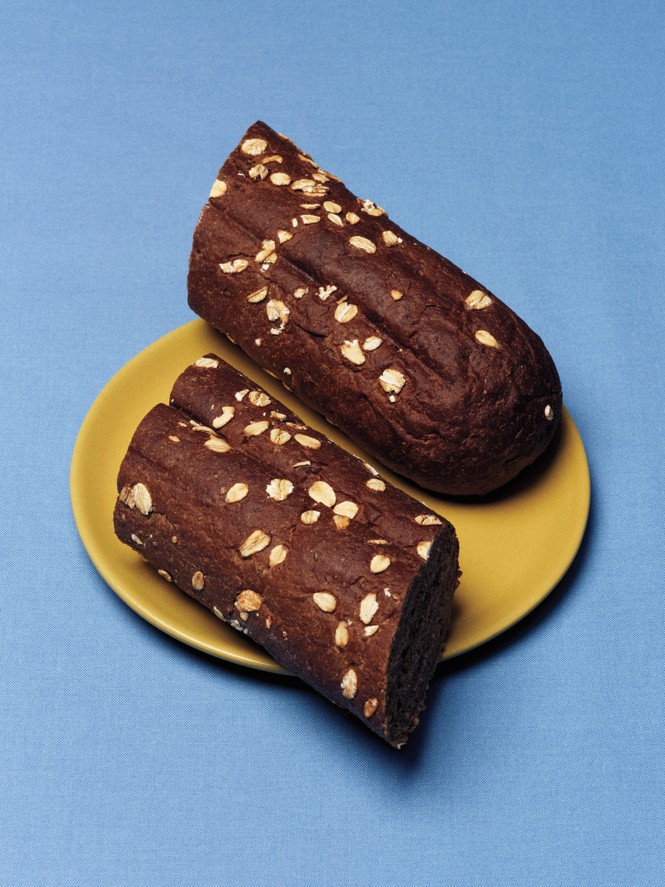
Hinson, an amiable man with six daughters, began working at the Cheesecake Factory as a line cook in Westbury, New York, 28 years ago, and now flies to Chile to meet salmon vendors, and Turkey to meet branzino vendors, and Sweden to watch German-made ovens churn out pasta and steak simultaneously, with an eye ever fixed on the horizon of potential Cheesecake Factory refinements. He is loquacious only about the science of cooking, but also possessed of a striking corporate verbal tic, in which he substitutes the word opportunities for problems : “If your equipment, after five years, has opportunities, you have to place service calls.” “We’ll meet with my team and discuss any opportunities that happened the week prior. Did we solve them all?” Many customers “had some opportunities with” a previous sourdough iteration that was unacceptably crusty.
The miniature whole-wheat baguette placed on our table is the rich brown of life-giving Diet Coke. It is warm, of course; soft, but with a firm crust; covered in a dense constellation of oats, for “a little bit of texture,” Hinson says. It is sweet in the way that adults like things to be—marginally—and mellowed further with the addition of salted Grassland butter. I sample it as I sample everything: like a black hole. I consume two baskets of baguettes solo; Hinson seldom eats free restaurant bread. I would like it to be sweeter, or saltier, or both. But it feels virtuous to be eating something at least moderately healthy, and so blatantly brown.
Except, Rubel informs me (of course), brown bread is not especially healthy. “It’s not?” I ask. “In real life?” Rubel replies. “No.”
I think of Rubel, and his self-sentenced ignorance of the delights of Red Lobster, a few weeks later, when I visit my father. Measured by the amount of joy it is capable of producing, I’d told Rubel, “a Cheddar Bay Biscuit at Red Lobster is pretty good.”
We moved my father cross-country to his apartment in Santa Fe a few years ago, after my mother died unexpectedly. I can tell before I’ve set one foot inside his door that the man has treated himself to a Red Lobster Ultimate Feast. “Ohhh, it smells like lobster in here!” I exclaim; he has been feeling poorly, and I have taken, recently, to entering his apartment with the verve of a cartoon character. My father is in his recliner, the Ultimate Feast sprawled out before him: A snow crab’s severed Jurassic limbs jut over the edge of his wooden tray alongside a half-eaten Cheddar Bay Biscuit.
I am happy to see that he’s summoned an Ultimate Feast for himself, because a couple of weeks earlier, he told me that food doesn’t “taste like food” to him lately. But I realize that he hasn’t made his characteristic dent in the spread.
“What does it taste like?” I ask.
“It kind of tastes like sawdust,” Dad says. “Even the biscuits didn’t taste good, and I love their biscuits.” He is so darkly fascinated by this—Cheddar Bay Biscuits’ novel flavorlessness—that he repeats the observation a minute later. “It’s amazing,” he says, “because I usually love their biscuits.” He encourages me to take the extra biscuit home, which of course I do.
My dad will die a few days later, while I am working on this story. This conversation about Cheddar Bay Biscuits will turn out to be one of our last.
The Best Free Restaurant Bread in America
Based on survey responses, Americans seem capable of genuinely convincing themselves that they have just eaten the best free restaurant bread in America anytime they are given gratis bread that is warm or hot. This is not just psychology, Kantha Shelke, a food scientist, tells me; “it’s actually thermodynamics.” Because aroma is “80 percent of the flavor,” Shelke explains, and warm bread releases volatile aroma compounds into the air, “the warm bread literally tastes better to us.” (She also tells me that, short of seizing a Cheesecake Factory and transforming it into your private residence, you will never, ever be able to re-create the exact taste of its brown bread at home. Commercial enterprises have access to oxidizing agents, dough-conditioning enzymes, and surfactants that “simply are not available to home bakers.”)
Apart from temperature, pillowy, soft, and sweet are the most common adjectives applied to favorite breads in people’s responses, followed by crispy and crusty. Small efforts to enhance presentation, plus novel shapes and flavors—bread served on a black linen napkin, for example, or apple fritters—seem to pay off big in terms of memorability. There are some quirky regional trends: Many Californians are able to name the exact local bakery from which their favorite restaurant bread is sourced. Millennials from Massachusetts are inordinately likely to at least mention a pizza chain called Bertucci’s that, I am informed over and over again, gives young diners raw dough to play with at the table. Immediate family members frequently identify the same bread as their favorite, as if this has been determined by group vote. Many people can only recall breads eaten as children.
Two restaurants are named often enough in the poll to reach the top 10 without being chains: Parc, in Philadelphia, and Le Diplomate, in Washington, D.C. These restaurants, both operated by the Philadelphia restaurateur Stephen Starr, turn out to serve the exact same bread. If, for the purposes of calculation, we consider them a single restaurant with two outposts, they receive the equivalent of 1,150 votes per 100 restaurants. There are other, no doubt smarter ways to manipulate the data. And, of course, there remains the possibility that the poll has demonstrated only the peculiar tastes of morons and deviants—with the exception of the gracious Stephen King. But you can’t keep fiddling with the numbers of your bread poll forever. At a certain point, you have to rejoin the world.
The wicker baskets at Parc, a French bistro on Rittenhouse Square, contain three varieties of bread tucked into wax paper—but the only one people talk about is the cranberry-walnut loaf. It is fitting that the best free restaurant bread in America should contain cranberries; they are indigenous to North America. If you were going to design a restaurant bread specifically intended to appeal to 21st-century Americans, you might well create this exact foodstuff: It is a very chewy sourdough, with a thick, crispy crust that is chocolate brown in color—practically the same hue as the Cheesecake Factory bread. The dried cranberries add so much sweetness that some people mistake them for cherries, but oats and nuts check the suavity before it runs amok. In fact, the bread has an Everlasting Gobstopper–ish ability to harmoniously convey the sensation of eating an entire meal, with dessert, in every bite. It is assembled from familiar ingredients, but unusual enough to be memorable. The terrazzo arrangement of nut and berry is beautiful by candlelight; the crumb appears studded with gems.
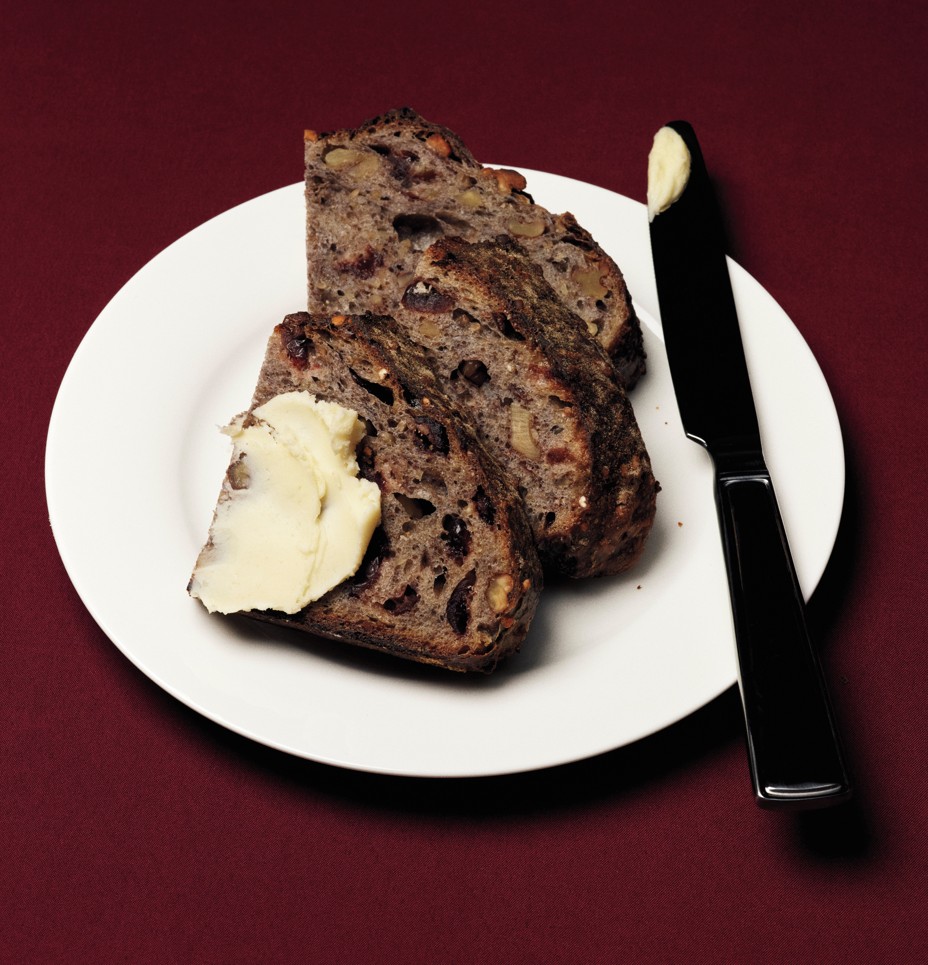
Starr estimates that, at a cost of about 60 cents a basket, with 10,000 customers a week, Parc gives away slightly less than half a million dollars in free bread every year—a figure that does not include butter. The kitchen turns out about 1,500 loaves a day, of which 200 are the cranberry-walnut. The brief that Starr gave his chef and baker when the restaurant opened was: “Just come up with the greatest breadbasket ever.” The goal, he tells me, was to create a breadbasket so satisfying that “you didn’t have to spend any money. You could just come in here, order the breadbasket, a glass of wine, and you’re good for the next five, six hours. We just wanted it to be joyful.”
“From a financial standpoint, it was the dumbest move we ever made,” he says. “It costs so much and people eat so much of it.” He’s come close to charging for it, he says. But “the moment I think I’m going to do it, I go, ‘I can’t do it.’ ”
My visit to Parc, a few weeks after my father’s death, is the first time I go to Philly, his hometown, without his knowledge. I am seated near a family: a mother, father, and college-age daughter. I can hardly look at them, even as I can’t keep my eyes off them. Veiled by Parc’s low lighting, I allow myself to sink into a luxuriant, tear-flooded sadness. My parents will never again shout to be heard in a winter-crowded restaurant, or identify the cheapest (Mom) or most expensive (Dad) entrée. They will never again call, into a McDonald’s drive-through speaker, the beverage-order coda that I have never heard anyone outside my immediate family utter: “And a cup of free water.” Before my check arrives, I request a to-go box of just cranberry-walnut bread, and am floored by the quantity of pieces I receive in a swish brown bag. I wish I could tell my parents about it. Just knowing it was possible to receive so much bread for free would have delighted them.
William Rubel’s profoundest anxiety about my article, I learn, is that I will inadvertently denigrate another culture’s bread—by suggesting that a yeasted roll is inherently superior to, say, chapati. He fears this more than the possibility that I might assert in print that Red Lobster Cheddar Bay Biscuits taste better than the bread served at Chez Panisse. (“I guess I need to eat it,” he says, catching himself declaring, with no firsthand knowledge, that the table bread at Red Lobster could not possibly be superior. I will extend this same grace to the bread at Chez Panisse.) “You’ll need to find some way to clarify that you aren’t saying these are the best breads in the world,” he tells me. “These are what people you talked to in America at this time considered the best.”
“There’s no recipe for the best bread,” Rubel says. “The best bread is written in each person’s heart.”
I disagree. The best bread—at least the best free restaurant bread in America—is the aforementioned cranberry-walnut loaf.
This article appears in the May 2026 print edition with the headline “I Found It: The Best Free Restaurant Bread in America.” When you buy a book using a link on this page, we receive a commission. Thank you for supporting The Atlantic.
 reply
reply