585 stories
·
0 followers

A simple model of AI-aided economic growth

1 Share

The Solow model has its uses, but it fails when it comes to major changes stemming from AI.  Consider instead an economy with (at least) two factors of production:

1. Intelligence.  Yes, formal smarts.  Playing chess, proving math theorems, and doing well on evals.  Don’t forget humans can do those things too, though AIs are now a huge boost here.

2. Polanyi knowledge.  Michael Polanyi, that is.  This refers to knowledge of time and place, inarticulable knowledge, custom and habit, and many other particularities that you can read about in Hayek and Polanyi and in many other social scientists, anthropologists too.

Humans specialize in this.  The AIs can aid in its production, but at least so far there is no way you can “bring an AI into your office and have it figure out how that office works.”  At least not in the human rather than the purely mechanistic sense.

In the model, intelligence and Polanyi knowledge combine to produce output.

Substitutability is fairly limited.  For instance, if you have problems of norms in your office, a mere dose of AI-drenched technocratic knowledge does not usually solve those problems.  Sometimes it even can make those problems worse, by empowering rent-seekers further.

Intelligence and Polanyi knowledge are not quite Leontief complements, but they are mostly complements.

Now recently the U.S. economy has experienced a huge positive shock to its Intelligence, with more to come.

The core prediction is that this increases marginal returns, employment, and real wages in the Polanyi knowledge sector.  All of a sudden, the inputs into that sector are relatively scarce, compared to the now-larger quantity of Intelligence.

There will also be some transitional unemployment in the Intelligence sector, at least once Centaur models fade.  But so far Centaur models are holding, for instance mathematicians did the prompting to do the new math work.  Nonetheless some of these Centaur employments will fade, just as they have in chess.

Note that the Polanyi sector cannot be boosted very quickly or with direct and simple efficacy.  It is messy by its nature, to cite a term from Luis Garicano.  So the wage and employment gains there are slow in coming.  But they keep on coming for a long period of time.  There are further AI/Intelligence advances on tap, plus absorbing the advances to date, and exploiting them, takes a long time.

In this model, if someone or something could “commandeer” the Intelligence sector, their power over society would be much more limited than it might appear at first.  The world does not change that much at first, because the necessary complements are lacking.

The Solow model usually does fine by ignoring these features of the world, in part because it is rare for the Intelligence sector to take such a rapid swing upwards.  So the ratios and complementarities across these two sectors usually are fairly constant in the short run, though not in 2026 or in the next years to come.

I recall talking through this model, and debating it with people, when I was seventeen years old.  The impetus for that was the Soviet preoccupation with cybernetics, central planning, and possible supercomputers.  We were all wondering what kinds of economic improvements that might lead to, or whether it could make central planning successful (no, basically, but that involves some yet further arguments).

Of course this very simple model can be improved upon in many ways, but it is a start.

This very simple model so far is matching up to the data, namely that we have shocking AI and tech advances, the job market is doing fine, markets do not see high risk, and economic growth is robust, not exploding, but likely will rise in the future.  These predictions change somewhat as the Polanyi sector, slowly, catches up to and incorporates the Intelligence explosion.

In the meantime, this is the best basic framework for understanding our current situation.

The post A simple model of AI-aided economic growth appeared first on Marginal REVOLUTION.

Read the whole story
Condiment9294
5 minutes ago
reply
Seattle, WA
Share this story
Delete

On Not Being a Homeowner

1 Share
Generational wealth shapes our futures and friendships, whether we talk about it or not.
Read the whole story
Condiment9294
14 hours ago
reply
Seattle, WA
Share this story
Delete

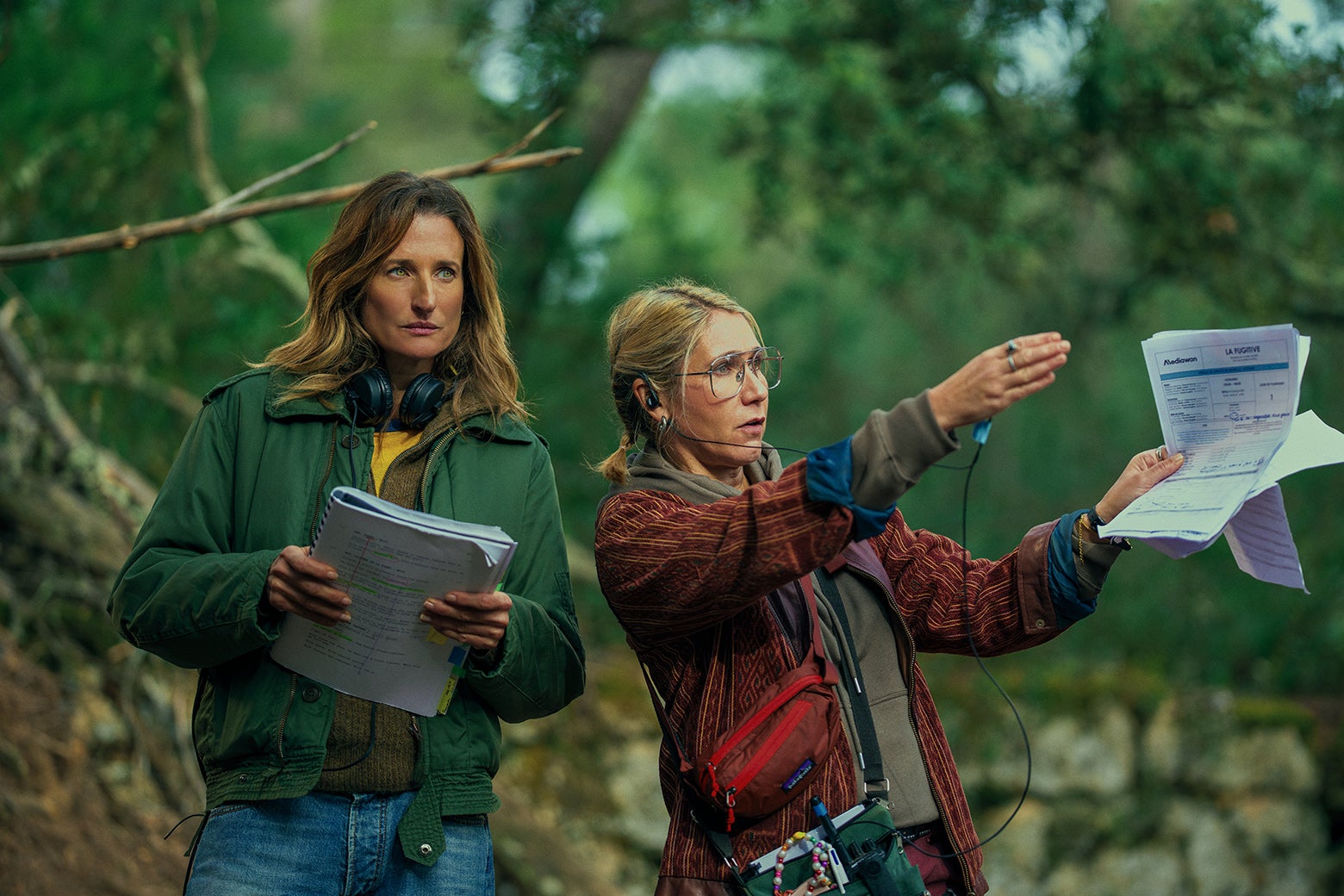
One of the Most Delightful Shows of the 2010s Is Finally Back With a New Movie. C’est Très Bon.

1 Share
A perfect little bonbon of a show is back with a perfect little bonbon of a Netflix movie.

Read the whole story
Condiment9294
2 days ago
reply
Seattle, WA
Share this story
Delete

What Howard Zinn Got Wrong

1 Share

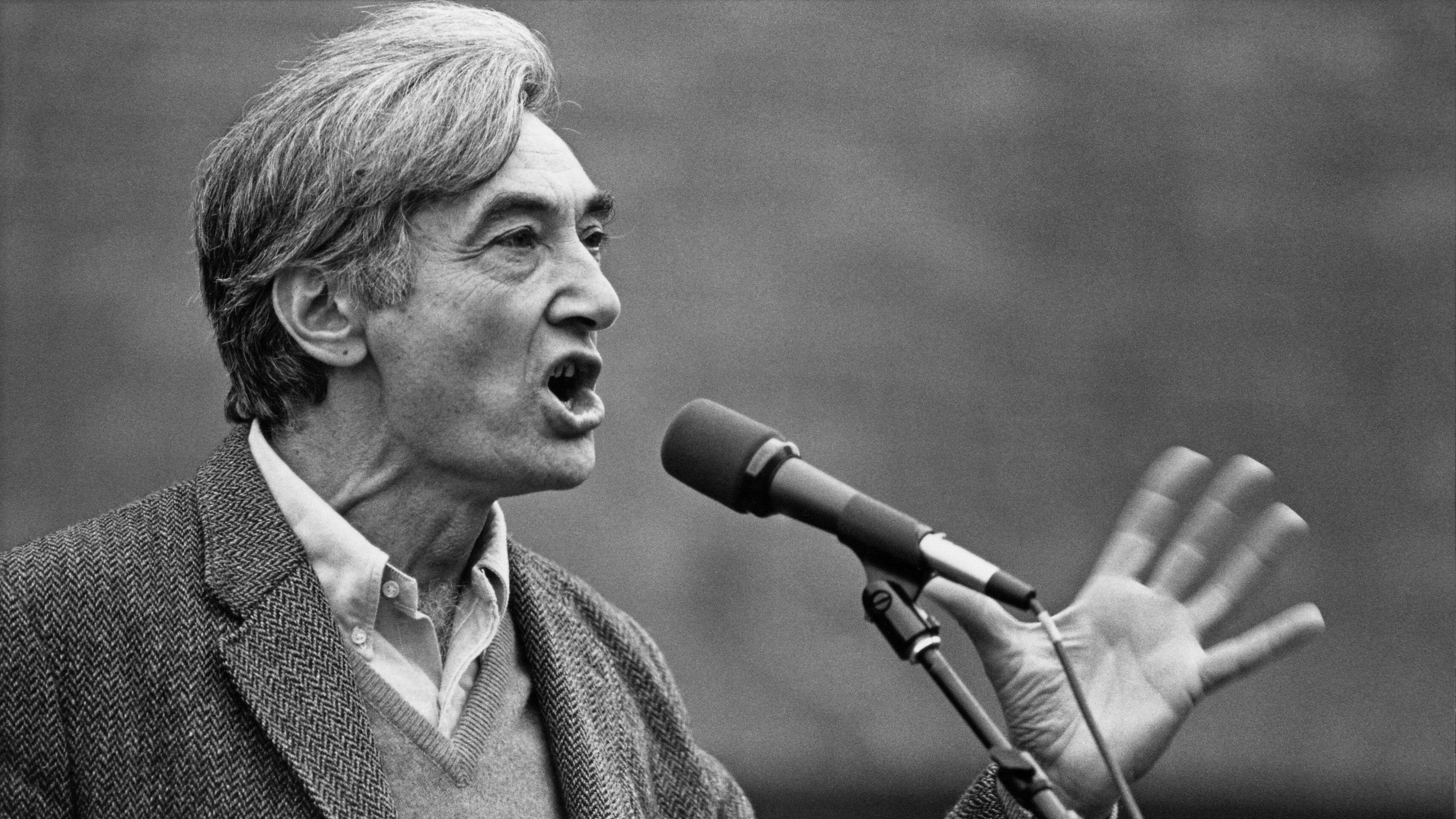
“What would Howard say?” This question, which Dave Zirin reports being “asked repeatedly” while he was working on his new biography of Howard Zinn, underscores how unusual a figure his subject cut in contemporary American life. Most historians live and die in relative obscurity. But 16 years after Zinn’s death, many people still look to him, not just as a scholar but as a kind of sage.

Zinn first became famous—and, in some circles, infamous—after the 1980 publication of his best-selling work A People’s History of the United States. The book advanced an ambitious and unrepentantly radical reimagining of the nation’s past. Zinn rejected the conventional organization of history around “the point of view of governments, conquerors, diplomats, leaders” and declared, “I prefer to try to tell the story of the discovery of America from the viewpoint of the Arawaks, of the Constitution from the standpoint of the slaves, of Andrew Jackson as seen by the Cherokees.” What emerged was a new grand narrative, one that promised to reveal what mainstream history had long concealed and to offer a new moral framework for the past. In Zinn’s telling, the powerful were almost always up to no good, and ordinary people were the heroes of the American story. They courageously built movements for justice and sometimes even won, though it never took long for the oppressors to regroup. The fight was never over.  

Unlike most best sellers, A People’s History never stopped selling. Each year during its first three decades in print, it sold more copies than the last. The book’s fans applauded its bottom-up, justice-minded approach to history, while its detractors dismissed it as a leftist morality play masquerading as a story about the past. No one could doubt that it changed the conversation about American history, not to mention the trajectory of Zinn’s life. By the time he died in 2010, he was an archvillain for the right and a secular saint for the left.

Zirin’s fast-paced biography, The People’s Historian, is an answer to the most interesting version of “What would Howard say?” One hardly needs to squint to imagine what Zinn would have thought of the current regime in Washington, and readers curious only about that can put this book down after page 4, where Zirin declares, “Fascist movements taking orders from billionaire insurrectionists were the kinds of struggles that Howard Zinn demonstrated a willingness to fight and, if necessary, die to oppose.” But Zirin himself is after something more. He knew Zinn personally and collaborated with him on projects; he admires him deeply. Zirin believes we need more than Zinn’s opinions today; he argues that we need the deeper wisdom that emanates from his life and work.

Zinn’s many gifts developed in the course of what was, by any estimation, a remarkable journey. He was born in 1922 to working-class Jewish immigrants in Brooklyn. In his early 20s he rushed to enlist in the fight against fascism, serving in the Air Forces during World War II. He would long regret his short tenure as a bombardier who dropped artillery shells on behalf of a compromised colonial power—as he would later come to see the United States—from such heights that he could not be sure where exactly they landed. Zinn’s willingness to admit he was gravely wrong is part of what Zirin loves about him. The people’s historian was a radical, but he was also a “happy warrior” who believed that people could change, and so could societies.

[Read: The new history wars]

As a participant in the civil-rights and anti-war movements, Zinn witnessed such transformations firsthand. He organized alongside his students at Spelman College as well as with famous activists, including Ella Baker and Daniel Berrigan. Together, in the 1960s and ’70s, they fought to change a country whose past and present were steeped in violence and white supremacy. The going was never easy, because, as Zirin tells it—very much in Zinnian fashion—they bumped up against so many villains in power. Sometimes it was the director of the FBI; other times, a reactionary university administrator. But the people could be powerful too. Any given campaign might be stymied, but the march went on. However dreary the news, the hope persisted for a better day.

Zirin argues convincingly that Zinn’s life story vindicates one of his deepest convictions: that ordinary people and “small acts” can change the world. Zinn was right about this, and Zirin concludes the book with a quote from him that draws out the optimistic implications of his faith in bottom-up movements: “We have been surprised before in history. We can be surprised again. Indeed, we can do the surprising.” This is a compelling message for the current moment—and any other. Yet one can agree with Zinn on the power of the people to make change and still wonder whether recent history has revealed the limits of his wisdom.


“Was he wrong to have faith in the people?” Zirin relates that some of Zinn’s devotees—“those politically raised on his ideas”—have asked him this question, in addition to the one about what he might say in any given situation. Zirin takes up the second query but answers it far less satisfactorily than the first. He acknowledges that “in 2024, 77 million voters checked the box for an authoritarian to take power once again,” and moreover that Trump “won masses of white working-class people and, according to political pundits, a not-insignificant number of Black and Latino men.” But Zirin does not wrestle with the meaning of these developments. Rather, he waves them away with invocations of the “tech oligarchs” and “autocrats” who are driving “our global descent into authoritarianism.” This is an homage in a way, a vintage Zinn move—evading tough questions about who “the people” are and what they really want.

A People’s History of the United States appeared the same year Ronald Reagan was first elected president. In later editions of the book, Zinn would cast Reagan—like Jimmy Carter before him and George H. W. Bush after—as a creature of “the Establishment,” elected by a majority of voters but by a minority of the voting population and, hence, hardly the people’s choice. Zinn wrote something similar in 2003 amid the travails of the early War on Terror: “I wake up in the morning, read the newspaper, and feel that we are an occupied country, that some alien group has taken over.” The following year, of course, George W. Bush won the popular vote.  

[Read: What if our ancestors didn’t feel anything like we do?]

Zinn was hardly the only academic to be thrown by this turn of events. The 2004 election left no doubt that the Reagan Revolution had been more than a blip; in its aftermath, American historians redoubled their efforts to understand the sources of the right’s surprising resurgence. What they have uncovered in the past two decades flies in the face of a central tenet of Zinnian orthodoxy. The sustained success of the modern conservative movement cannot be explained away as the outcome of establishment machinations or a top-down takeover. Its energy and vitality came in no small part from the grassroots: from stay-at-home moms and car mechanics, from the suburbs and the Sun Belt, from evangelicals and Catholics and more. The revival of the Republican Party’s national fortunes at various moments, going all the way back to Richard Nixon, confirms Zinn’s faith in the power of bottom-up movements, even as it confounds his almost mythic sense of “the people” as inevitably on the right side of history (that is, the left side of the political spectrum).

And if ordinary folks are more complicated than Zinn and Zirin recognize, perhaps those who wield power can be too. What made the right’s political comeback so surprising, after all, was that in the mid-1960s the liberal-left coalition was winning not only in the streets but also on Capitol Hill. In those years, progressives leveraged grassroots energy into breakthrough policy change. The leaders of major civic and political institutions were rarely out in front of progressive activists, but at least some of them chose to pull levers that made the United States more equal and just. The Civil Rights Act of 1964 and the Voting Rights Act of 1965 passed with sweeping bipartisan majorities.

After an outrageous assault by law enforcement on peaceful demonstrators in Selma, Alabama, President Lyndon B. Johnson memorably proclaimed—before a joint session of Congress, Cabinet officers, Supreme Court justices, and more than 70 million Americans watching on television—that “it is not just Negroes, but really it is all of us, who must overcome the crippling legacy of bigotry and injustice. And—we—shall—overcome.” His invocation of a beloved civil-rights anthem brought a tear to Martin Luther King Jr.’s eye. None of this impressed Zinn. In A People’s History, he framed both the speech and the landmark civil-rights legislation of the 1960s as “concessions.”

Then and now, such unrelenting suspicion springs from genuine patterns of institutional failure and betrayal. Villains are, alas, not just a figment of our collective imagination. And yet, in 2026, with the Democrats on the outside of power looking in, progressives might nevertheless ask whether the Zinnian propensity to demonize anyone and everyone wielding authority has served their cause well. Dismissing landmark legislation as mere concessions can miss the fact that there is no path forward from righteous protest to lasting change that does not run through better—if imperfect—public policy. However “exhilarating” Zinn’s counternarrative can be, it may have encouraged millions of well-meaning readers to be skeptical of the possibility that any good could come through the slow, messy institutional work that is central to pluralistic democracy. Coincidental or not, this much is true: During the same period when Zinn’s influence was rising meteorically on the left, the right became much more adept at channeling populist enthusiasm into deliberate campaigns to reshape the major institutions of American life.  

“I wanted to change the world, and I thought history might be helpful,” Zinn liked to say, lightheartedly. His biographer is right to argue that Zinn, an ordinary person, did change the world—though perhaps he didn’t do it only in the ways that either of them hoped he would.


Read the whole story
Condiment9294
11 days ago
reply
Seattle, WA
Share this story
Delete

The World Is Telling the Wrong Story About China

1 Share

Compared with Donald Trump’s chaotic, divided, and violent America, China is a bastion of steady progress and serene order. This, at least, is the story that Beijing’s propagandists have been eager to spread. The Global Times, a Communist Party–run news outlet, proclaimed earlier this year that “the world’s peace and development increasingly rely on China’s stability.” The state news agency Xinhua chimed in that “in today’s uncertain world, China’s stability and predictability provide a rare and valuable anchor, which is set to benefit other countries.”

This message appears to be resonating around the world. A Pew Research Center survey of three dozen countries recently found that China is now seen more positively than the United States. Respondents expressed more confidence in Chinese President Xi Jinping to “do the right thing” in world affairs than Trump.

China’s stability may appear desirable to a world in turmoil. But inside China, this “stability” looks a lot like policy paralysis, economic stagnation, and intensified political repression. What all the handwringing over China’s growing influence and surging exports fails to recognize is that the country is flatlining politically and economically. The evidence is in plain sight.

Policy makers around the world are understandably fixating on China’s abundant and cheap electric cars and competitive AI models, which present a serious threat to national industries. But these advances are one small part of a broader economy with pernicious and deep-rooted problems. The country’s property-market downturn, triggered by the 2021 meltdown of the real-estate developer Evergrande, has not hit bottom. Home prices continue to fall, eating away at the wealth of many middle-class households.

Trump’s war with Iran has pushed up oil prices, raising the cost of production for Chinese companies and ending three years of deflation. But the underlying problems of oversupply and weak demand remain entrenched. Youth unemployment, which emerged as a major social issue in 2023, has become chronic. The jobless rate among workers aged 16 to 24 stood at 18 percent last month.

[Matteo Wong: What really happens if China wins the AI race?]

These pressures have left Chinese consumers reluctant to spend. Retail sales grew a paltry 0.6 percent in July. Domestic sales of EVs have been falling. China’s economic problems have become so dire that some economists suspect that the official government statistics are overstating the country’s true performance. Although China’s economy has been growing a respectable 5 percent annually for the past three years, the research firm Rhodium Group estimates that China’s actual growth rate was probably near 2 percent in 2023 and closer to 3 percent over the past two years.

Any hope that China’s leaders will tackle these problems is almost certainly misplaced. Xi has stubbornly resisted the difficult and politically sensitive reforms necessary to fix the country’s economic model during his nearly 14 years in charge, and he is unlikely to change his approach anytime soon. He remains as myopically focused as ever on state-led programs to advance Chinese technology and industry, and particularly AI, and is apparently convinced that they will boost the entire economy. Perhaps this strategy will one day pay off, but the signs aren’t good. China’s debt has exploded on Xi’s watch—at three times the size of the economy, it surpasses even America’s debt burden. Growth in the second quarter of 2026 was the slowest since 2022, when China was still battling the coronavirus pandemic.

The Communist Party could theoretically change its leadership team at a major congress next year, but in the absence of any clear alternatives or successors, Xi is likely to secure yet another five-year term as general secretary. Xi’s ruthlessness in office has been marked by regular purges of possible rivals, generals, and members of other party factions. His latest victim appears to be Fang Xinghai, a former top securities regulator well-respected by international business leaders, against whom the party recently launched an investigation for unnamed disciplinary violations. With Fang’s fall, the government is sidelining yet another economic reformer with valuable expertise who might have helped fix the economy’s woes but whose market-oriented philosophy has fallen out of favor with a regime that prefers a top-down approach to national development.

Xi maintains social order through this never-ending malaise by controlling information and repressing alternative views. A sweeping new law took effect last month that mandates Mandarin as the primary language in education and orders  parents to guide children to “love the Chinese Communist Party.” In prizing national unity over ethnic autonomy, this policy seems designed to force the country’s various ethnic minorities, including Uyghurs, Tibetans, and Mongolians, to assimilate into the majority Han Chinese culture. Even humor must follow the party line. Local authorities are reportedly investigating Guo Degang, a popular comedian who made the mistake of altering the lyrics of a patriotic song cherished by Communist cadres during a performance in the city of Wuhan last month.

[Vivian Salama and Jack Rodriquez-Vars: The danger of Trump’s anti-communist rhetoric]

Despite global surveys that report a growing fondness for China, the country’s “stability” comes at a steep cost to other countries. China may not be dropping bombs, but Beijing is arguably helping other countries drop theirs. By economically supporting Iran and Russia, Xi is essentially fighting proxy wars in both Europe and the Middle East.

In the absence of domestic demand, China’s subsidized and bloated manufacturing industries are exporting their problems and threatening the survival of competitors around the world. Given weak sales at home, Chinese automakers are shipping twice as much of their production overseas as they had a year ago. European Union officials are seeking greater powers and enhanced cooperation among its members to protect the continent’s industries from an onslaught of cheap Chinese imports, which have not only cost the region jobs but have run up a trade deficit with China topping $1 billion a day.

As Trump’s unpredictable and self-obsessed decision making saps America’s economic competitiveness and military might, China’s rise on the world stage is destined to continue, if only by default. But Xi’s insistence on preserving stability instead of addressing China’s serious structural problems threatens this ascent. Perhaps, then, the competition between China and the U.S. is less a contest for supremacy than a race to see which country hits bottom first.


Read the whole story
Condiment9294
12 days ago
reply
Seattle, WA
Share this story
Delete

The Big Cheese Hits Theaters Today in NYC

1 Share
Courtesy of Obscured Releasing

In 2020 my wife, Sara Joe Wolansky, helped to convince me to give up my job as a reporter at Bloomberg to start this newsletter.

Two years later, I had her back when she decided to quit her full-time job making documentary shorts for the New Yorker to pursue a yet-to-be-identified first feature documentary.

NYC Tickets

I’m proud to share that her film, The Big Cheese, a feature-length documentary about American cheesemongers, is having its theatrical premiere starting tonight at the IFC Center in New York City.

In a wonderful review this week, the New York Times called The Big Cheese a “satisfyingly tender story,” writing, “This is ultimately a tale of resilience, and Wolansky focuses on a kind of nourishment that transcends food: the power of community.”

Other early reviews have called it “bright, tangy, and bold,” and “thrilling and intense.”

From my point of view, The Big Cheese is a gripping, energetic, and loving film that will have you laughing, crying, and hankering for Challerhocker.

I played a small role as an associate producer of the film, which mostly means that I was a supportive husband.

I’ll be at tonight’s screening at the IFC Center at 7:35 p.m. I’m giving away five tickets to the first requests that I receive. Reply to the newsletter if you’d like a ticket.

There will be a Q&A with Sara Joe and the film’s star, Adam Moskowitz, moderated by the one-and-only David Zabar of Zabar’s.

The Big Cheese is going to run all week at the IFC Center and then start screening in Los Angeles on Aug. 14.

(I know many of you will want to know when the film is in San Francisco. I’ll try to drop a line in the newsletter when that happens.)

I hosted a party last night with Joe Marchese at Human Ventures in New York City for friends of the newsletter to celebrate the film’s release. Thanks, Joe, for helping me to support Sara Joe.

Thanks to O’Shaughnessy Ventures for helping to fund the film and make this whole thing possible.

Both as an independent creator and as someone who writes about startups, I know how hard it is to build something out of nothing. Making an independent film requires true tenacity, and I’m so proud and excited that Sara Joe’s project is coming to theaters near you.

If you love cheese, the movies, and air conditioning — or just want to have a good time meeting a plucky new subculture — go check it out!

Read the whole story
Condiment9294
35 days ago
reply
Seattle, WA
Share this story
Delete
Next Page of Stories